 info@triniteconsulting.com
 +1 (224) 385 9760
The insurance sector across the Midwest is entering a decisive phase of transformation. From Chicago to Indianapolis, insurers are re-evaluating how their operations run, not just to reduce costs, but to build resilience and agility.
With rising regulatory expectations, customer demand for faster claim resolutions, and talent shortages in specialized roles, Midwest-based insurers are realizing that traditional operational approaches no longer suffice. This has led to an increased focus on process optimization frameworks, which are structured methods that help insurers streamline workflows, use data intelligently, and embed a culture of continuous improvement.
Unlike one-time efficiency projects, these frameworks enable sustainable, measurable change. And that’s where an experienced business consultant, particularly those familiar with the region’s insurance ecosystem, steps in to bridge strategy and execution.
Why Midwest Insurers Are Moving Toward Process Optimization
Many Midwestern insurance firms operate in a competitive yet relationship-driven environment. Regional carriers and MGAs often balance decades-old legacy systems with the need to modernize. They serve local communities but compete with national carriers equipped with large automation budgets.
This mix of legacy infrastructure and regional agility makes the Midwest a prime ground for consulting-driven process transformation.
Some of the biggest motivators behind the shift include:
Operational Scalability
Adapting to increased claim volumes without expanding headcount.
Compliance Pressure
Navigating evolving state and federal insurance regulations with consistent process documentation.
Digital Modernization
Integrating legacy core systems with cloud-based automation tools.
Workforce Efficiency
Enabling smaller teams to handle larger workloads through optimized workflows.
Rather than introducing sweeping overhauls, Midwestern insurers are adopting structured, incremental optimization models that deliver results without major disruption.
Beyond Efficiency: The Strategic Role of Optimization Frameworks
While most firms initially turn to process optimization for cost or time savings, the real transformation comes when these frameworks are viewed as strategic enablers rather than tools for operational tuning.
Consultants guide insurers in using frameworks such as:
Continuous Improvement Cycles (Plan–Do–Check–Act):
For monitoring recurring inefficiencies and adapting quickly.
Value Stream Mapping:
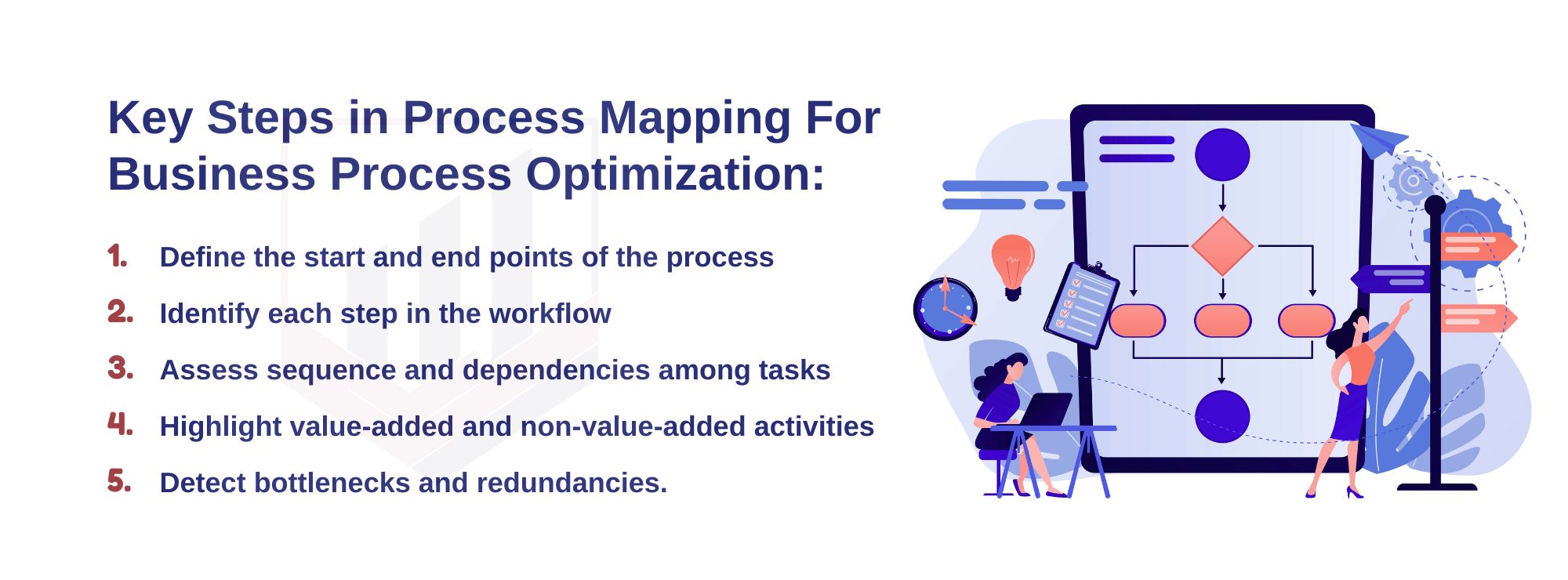
To visualize how information and tasks move through claims or underwriting chains.
Process Maturity Models:
To assess current capabilities and define measurable milestones for improvement.
It might seem like these approaches are about replacing people with automation, but in reality, they are about creating transparent, repeatable, and measurable processes that support growth.
The Business Consultant’s Role: Turning Complexity into Clarity
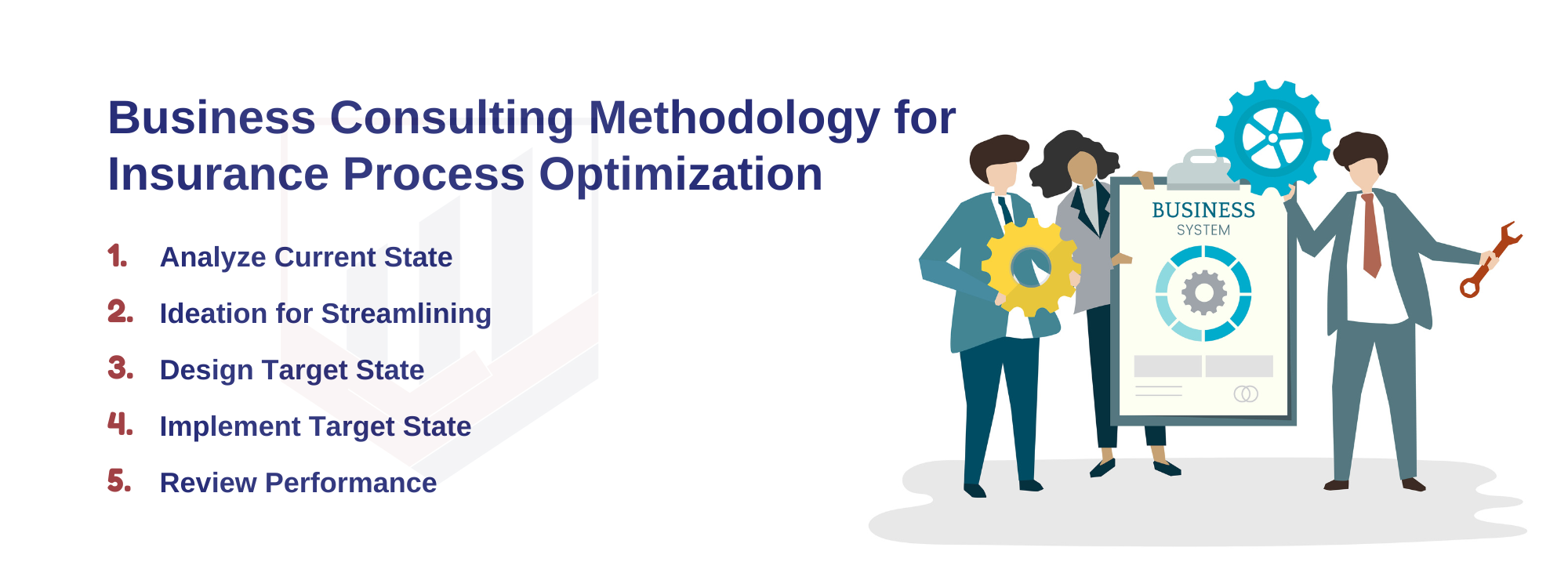
Midwestern insurers often face a unique operational mix: distributed offices, diverse product lines, and varying regulatory requirements. Business consultants help navigate these complexities by focusing on clarity and structure over immediate automation.
Key consulting deliverables typically include:
- End-to-End Workflow Mapping tailored to each product line.
- Data-Driven Performance Dashboards to track KPIs like claim cycle time and policy turnaround.
- Change Management Playbooks ensuring staff adoption of new workflows.
- Technology Integration Roadmaps aligning legacy systems with new digital tools.
Consulting partners such as a business consulting firm in Chicago, bring local understanding to these engagements, balancing strategic vision with hands-on implementation.
Data, Technology, and the Human Factor
Midwestern insurers are increasingly leveraging analytics-backed decision-making, using performance data to identify friction points and trigger continuous improvement loops.
At the same time, successful optimization frameworks always consider the human element:
- Training underwriters and claim handlers to interpret workflow metrics.
- Encouraging team-based problem solving rather than top-down directives.
- Rewarding incremental process enhancements across departments.
When technology, data, and people align, insurers move beyond efficiency, they become adaptive organizations capable of thriving in changing markets.
How Success is Measured
The success of process optimization is not just measured by cost savings; it’s evaluated by agility, consistency, and customer impact.
Insurers adopting structured optimization frameworks have reported:
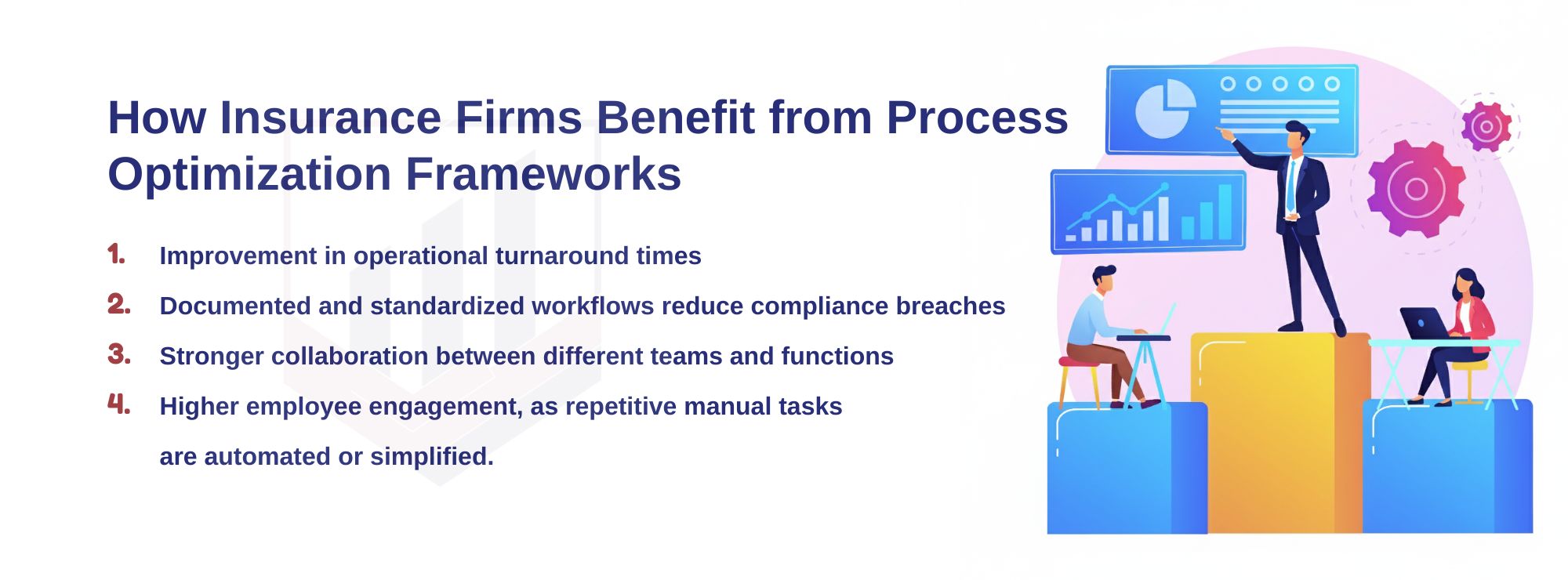
- Improvement in operational turnaround times within the first year.
- Fewer compliance breaches due to documented and standardized workflows.
- Stronger collaboration between underwriting, claims, and customer service teams.
- Higher employee engagement, as repetitive manual tasks are automated or simplified.
These outcomes create a ripple effect, where they enhance not only internal productivity but also client satisfaction and brand credibility in local markets.
Challenges on the Road to Optimization
Despite clear benefits, insurers often face barriers such as resistance to change, outdated data systems, or unclear ownership of processes. Addressing these requires leadership commitment and structured change management; something consultants emphasize heavily during transformation planning.
By focusing on communication, stakeholder alignment, and gradual rollout, consulting-led optimization minimizes disruption while maintaining service continuity.
Conclusion
The transformation of insurance operations in the Midwest is not loud or headline-grabbing, but it’s deliberate, sustainable, and deeply effective.
Firms that once relied solely on experience and intuition are now embracing data-driven decision-making and structured process optimization to stay competitive in a changing market.
Through strong consulting partnerships and practical frameworks, these insurers are proving that operational excellence doesn’t require radical change; it requires discipline, visibility, and a commitment to continuous improvement.
For Midwest-based insurance leaders, now is the time to act: start small, measure everything, and let optimization drive smarter, more resilient growth.
Get Consultation
Related Blogs
Recent Blogs
Partner with us today!


