 info@triniteconsulting.com
 +1 (224) 385 9760
Every company wants smoother workflows and higher efficiency, yet many end up with complex systems that slow them down even more. The gap between optimization goals and real outcomes often lies in how processes are understood, redesigned, and implemented. In today’s fast-changing business environment, process optimization to boost business efficiency is a dire necessity. Organizations that regularly refine their workflows gain a competitive edge in efficiency, cost reduction, and customer satisfaction.
With the right guidance from business consultants, these pitfalls can be turned into opportunities for transformation.
In this post, we will explore the most common business process optimization mistakes and how experienced business consultants help companies fix them.
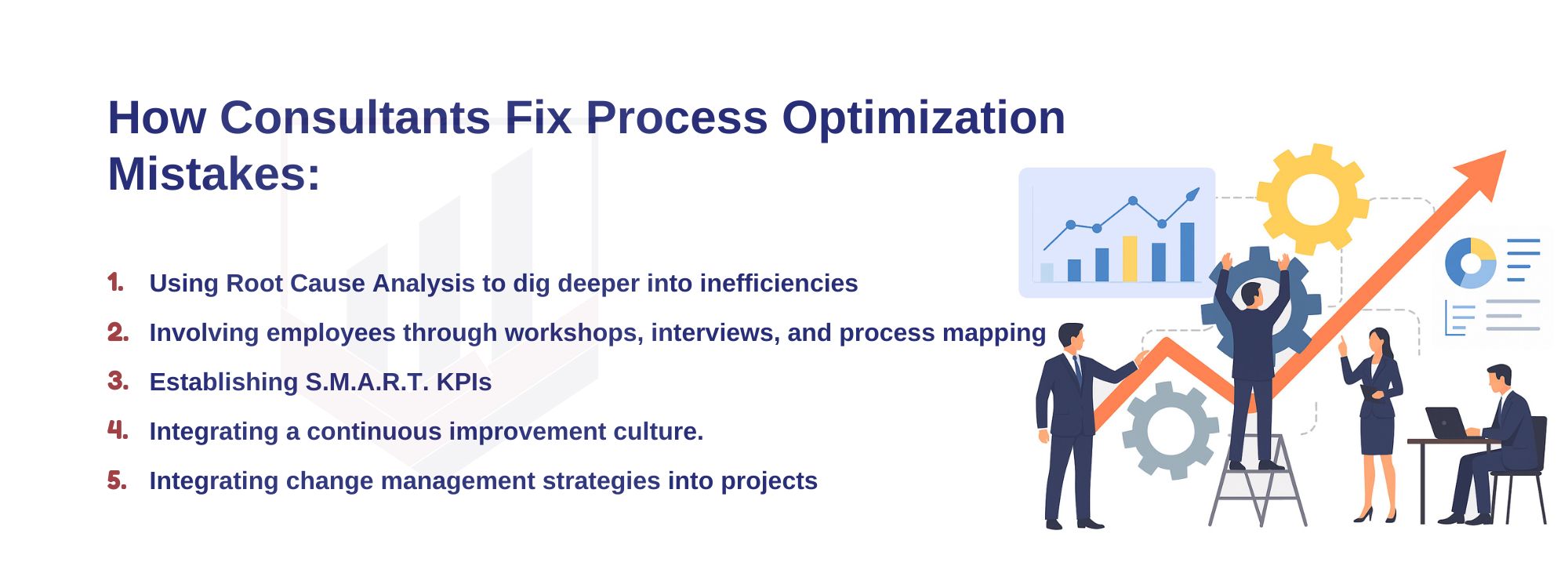
1. Focusing on Symptoms, Not Root Causes
The problem:
Many organizations rush to “fix” surface-level issues, such as slow approval times or frequent rework, without identifying what’s actually causing them. As a result, the same problems resurface, wasting valuable resources.
How Business Consultants fix it:
A leading business consultant would use root cause analysis tools like the Five Whys or Fishbone Diagrams to dig deeper into inefficiencies. They look beyond obvious pain points and analyze upstream and downstream processes to uncover the true source of the problem. Once the root cause is identified, solutions are designed to eliminate it permanently rather than treat the symptoms.
2. Ignoring Employee Input
The problem:
Top-down optimization efforts often exclude the people who perform the work every day. This leads to resistance, impractical solutions, and a lack of ownership among employees.
How Business Consultants fix it:
Successful business consultants involve employees from the start through workshops, interviews, and process mapping sessions. They know that employees’ hands-on experience reveals the reality of how processes function — not just how they are supposed to. This inclusive approach boosts engagement and ensures that changes are both effective and embraced.
3. Over-Automation Without Simplification
The problem:
Many companies jump straight into automation tools like RPA (Robotic Process Automation) or AI-driven systems, believing technology alone will fix inefficiencies. Automating a flawed process, however, only accelerates inefficiency.
How Business Consultants fix it:
Consultants take a process-first approach. They analyze, simplify, and streamline workflows before introducing automation. Once unnecessary steps are removed, technology is applied strategically; this ensures that automation enhances performance instead of complicating it.
4. Lack of Clear Metrics and KPIs
The problem:
Optimization efforts often fail because there’s no clear way to measure success. Without metrics, it’s impossible to know whether changes are delivering real value.
How Business Consultants fix it:
Business consultants establish SMART KPIs (Specific, Measurable, Achievable, Relevant, and Time-bound) early in the project. They use data analytics to create dashboards that track performance indicators like cycle time, error rate, and cost savings, giving leaders a transparent view of progress and ROI.
5. Treating Optimization as a One-Time Project
The problem:
Many organizations treat process optimization as a one-off initiative instead of an ongoing improvement journey. Over time, processes drift back into inefficiency due to changes in market conditions, technology, or staffing.
How Business Consultants fix it:
A continuous improvement culture is part of the business consulting services framework. Consultants help companies train their internal teams on Lean, Six Sigma, or Kaizen methodologies and establish review cycles to keep processes aligned with evolving business goals. The focus shifts from “fixing problems” to “preventing inefficiency.”
6. Poor Change Management
The problem:
Even the best-designed process improvements can fail if not properly implemented. Employees may resist change, or leadership may not fully support new practices.
How Business Consultants fix it:
Experienced consultants integrate change management strategies into every project. This includes clear communication plans, leadership alignment, training programs, and feedback loops. By addressing both the technical and human sides of change, consultants ensure smoother transitions and lasting adoption.
7. Not Aligning Optimization with Business Strategy
The problem:
Optimizing processes without linking them to overall business goals can result in misdirected efforts — improving what doesn’t matter to the customer or the bottom line.
How Business Consultants fix it:
Consultants align every optimization initiative with the organization’s strategic objectives. For instance, if the goal is to improve customer retention, the focus will be on enhancing customer-facing processes rather than purely internal cost-cutting. This ensures process improvements deliver measurable business value.
Final Thoughts
Business process optimization can unlock enormous potential, but only when done right. The biggest mistakes usually stem from rushing, overlooking people, or lacking strategy.
That’s where business consultants bring value: by combining analytical expertise, strategic vision, and change management skills to ensure optimization efforts produce sustainable, long-term results.
When businesses partner with skilled consultants, they don’t just make their processes better — they make their organizations smarter, faster, and future-ready
Get Consultation
Related Blogs
Recent Blogs
Partner with us today!


